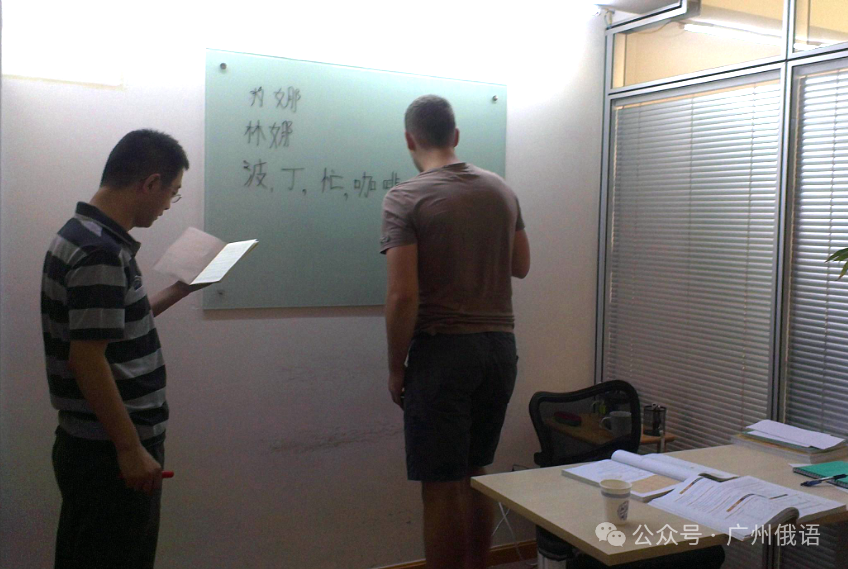
Why this page exists. Most of our guides are how-to documents. This one is a snapshot. In 2014 a reporter sat down with two Russian students of Mandarin who had just arrived in the city, and with Russian consul-general Mikhail Medvedev. Their answers — about warmth, language, loneliness, and what the Russia–Guangdong corridor actually looks like — remain the most honest short read we have on what it feels like to land in Guangzhou as a foreigner. The piece is republished here with light editing.
The Canton tower, the arcaded qilou houses, Cantonese food — Guangzhou presents itself to Russians as a sequence of surprises. They like the city's open parks and green spaces, and they are mildly worried about the thin walls of Chinese apartments. Most Russians living in Guangdong today work in wholesale buying, logistics or light manufacturing; a smaller group is in consulting, creative industries and academia. Almost all of them learn some Mandarin after they arrive.
Aleksandr: the trade window
Aleksandr is tall, with the high-bridge nose typical of Russian faces, dressed in a blue hoodie and dark jeans — a Russian silhouette with a Chinese-shopping sensibility. Inside the door he shakes hands the Chinese way and greets you with a wobbly "你好".
Four months before the interview, Aleksandr and his girlfriend had landed in Guangzhou with a "gold-rush" plan. Aleksandr had studied economics; he had watched the Russian consulate open in Guangzhou a few years earlier and correctly read it as the city's promotion to a third Russia-China window after Beijing and Shanghai. Most of the Russia-China trade that flowed through Manchuria in the past, he reasoned, was actually being manufactured in the Pearl River Delta — and if you wanted to be in business, you had to be at the source.
"Manchuria used to be the headline for Russian trade, but most of the goods come from the Pearl River Delta in the end. To do the trade properly, you have to start from the manufacturing side."
Niya: the logistics plan
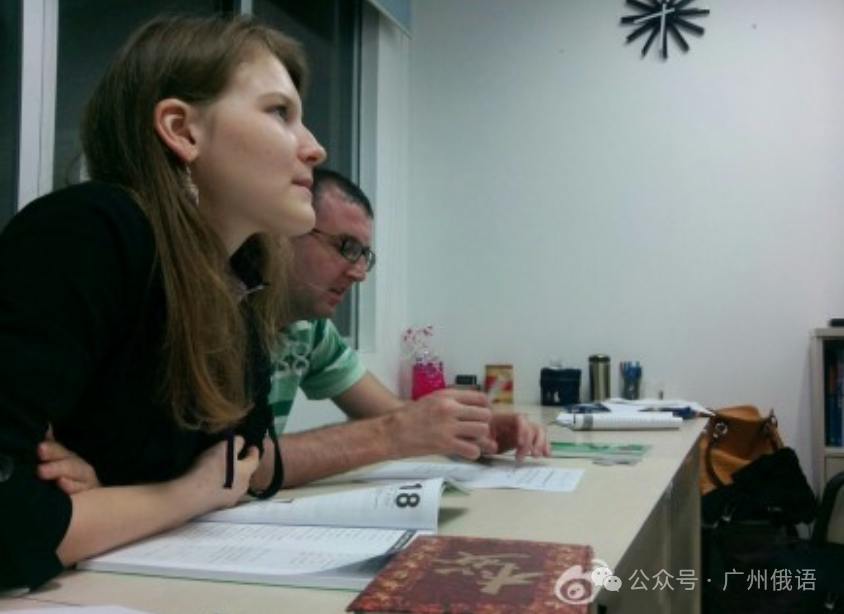
Niya, also from Russia, has an even more specific ambition: China–Russia logistics, all the way. Her confidence comes from the volumes she sees in the trade figures — and from the fact that she is in the Pearl River Delta at the moment the volumes are growing.
On the language question, Niya admits she cannot tell Mandarin and Cantonese apart when she first arrived. "Cantonese is almost impossible to understand", she says, after a few months of trying. She picks up the Chinese habit of a quiet post-lunch rest. She takes the metro and the bus now and reads the English signage on the metro lines without difficulty. The rush-hour crush is not new to her: Moscow's metro is just as crowded, and Moscow and Guangzhou have similar-sized populations.
Spring that never ends, walls that feel too thin
Aleksandr is from a Russian coastal city. The first thing that hit him in Guangzhou was the scale: tall buildings, big malls, dense crowds. Moscow's buildings, he says, are "the small guys" next to Guangzhou's. Russian retail also spaces its shops much further apart, which makes daily shopping a longer trip.
Aleksandr likes the look of Guangzhou apartments — but, like most newcomers from northern latitudes, he was anxious about the walls. "The walls are so thin — would they survive the winter?" As the Guangzhou winter actually arrived, his worry faded: the buildings are built for subtropical conditions, and the cold is mild by Russian standards. Niya took the opposite view: Guangzhou is spring weather all year, flowers everywhere, the leaves stay green.
What they love about Guangzhou
The arcaded qilou streets are a constant source of curiosity for Niya. The shopping — both the big malls and the wholesale markets — wins consistent praise. After several shopping trips, Niya's wardrobe is mostly Chinese: T-shirts, trainers, a phone. "Cheap, and they look good," she says of Chinese-made goods.
Both Aleksandr and Niya like Guangzhou's parks. Niya likes the design touches — the Chinese-style covered walkways, the flowerbeds trimmed into patterns. Russian parks, by contrast, are closer to raw nature. The hills and the green feel more curated here.
What they miss
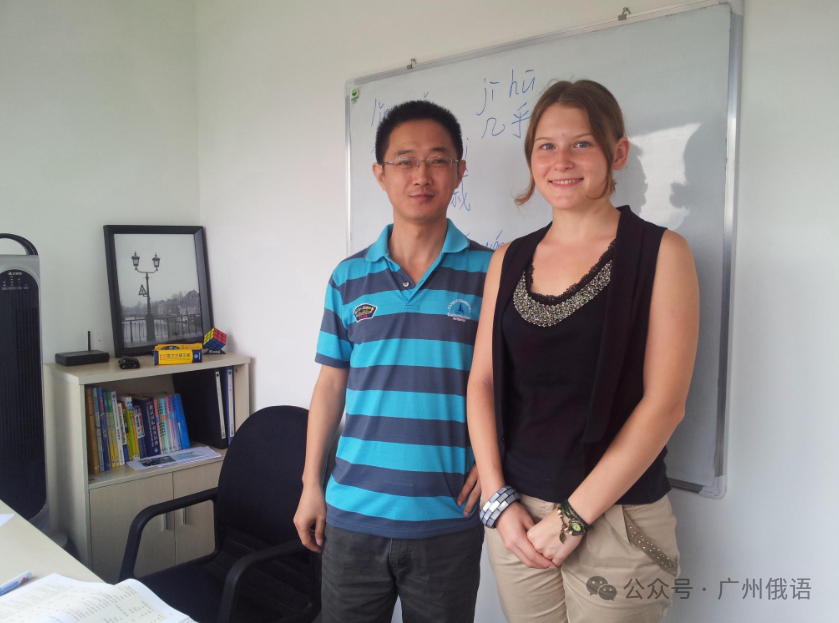
The biggest gap is language. Both Aleksandr and Niya struggle with Mandarin, and Cantonese remains mostly opaque. By the time of the interview, Aleksandr and Niya had each been back to Russia once. Aleksandr says the loneliest part of being far from home is not the food or the weather — it is the absence of family. Having his girlfriend with him, and a small Russian community in Guangzhou, softens that.
What they eat
Aleksandr embraces Cantonese cooking quickly: the variety of techniques — frying, roasting, steaming, sautéing — leaves Russian cuisine, which he finds narrower, looking a little pale by comparison. Niya's three Cantonese favourites are soup, steamed fish, and the northern dumplings and smashed cucumber she has learned to order in Mandarin. Both miss Russian bread.
What they do at weekends
Niya has been to the Canton Tower and walked the roof — the tower is taller than the Moscow TV tower, she notes, with some pride — and she did the speed-descent ride at the top. She calls it "very exciting". She has also been to Hailing Island off Yangjiang with friends, swum, surfed, and eaten her way through a cheap seafood dinner. Aleksandr's routine is simpler: he works, and he studies Mandarin.
What the consul-general says
The piece then turns to Mikhail Medvedev, the Russian consul-general in Guangzhou at the time. His read on the community:
"About 5,000 Russians live in Guangdong today."
Most are in wholesale buying, logistics, light manufacturing, consulting, or the creative industries. A well-known Guangzhou circus has almost half-Russian performers. Several attend university.
"Most of them learn Mandarin after they arrive."
Southern China is unlike Russia, and newcomers have to get used to the food, the culture, the pace and the language. After the initial settling-in, Russian residents find they like the food, the spacious apartments, the warm climate, the public transport and the late-opening shops.
"The biggest issues are language, Russian goods, healthcare and schools."
Russians lose passports occasionally — the consulate issues replacement identity documents for them. There are also commercial disputes that the consulate helps to mediate. Language is the universal barrier. Russians cannot buy Russian staples or medicines in Guangzhou shops. Healthcare is workable but inconvenient: there is exactly one Russian-speaking doctor in Guangzhou. And there is no Russian-language school in southern China for the children of Russian families — a problem the consulate flags as urgent.
"No mass exodus of Russian business."
Successful Russian-owned businesses do exist, mostly with Chinese partners. The light-industry firms that have left have done so because southern China's labour costs have risen, not because of any broader pull-back. Some relocations are family-driven: people want to spend more time with ageing parents.
"Guangzhou is a modern city with a bright future. China is open to the world, and more and more foreigners will come to Guangzhou — not only Russians. I am sure Guangzhou's residents will be gracious hosts to foreign guests."
What this piece is, twelve years on
The interviews were filed in 2014. Read in 2026 they describe a pre-pandemic, pre-240-hour-transit-visa, pre-full-foreign-purchase-reform Guangzhou. The Russia–Guangdong corridor has changed — Nansha has a much larger Russian-speaking presence, the Russian school gap has been partially met by Saturday schools and online tuition, and the trade focus has shifted away from light consumer goods. The lived texture, though — the thin walls, the language barrier, the parks, the search for Russian bread — has not changed much. If you are a Russian speaker arriving in Guangzhou today, you will find the city the interviewees describe, plus faster visa rules, a slightly larger Russian community, and a property market that is open to you without any purchase cap.
Reading note. This is reporting lightly edited for English-language readers; the 2014 interview is the source of record. Names of the two students have been retained; consul-general Medvedev's remarks are quoted as filed. The 2026 update at the end of the piece is the only editorial addition.
Related reading on LifeTourChina
- Guangzhou rental guide for expats
- Can Expats Buy Property in Guangzhou? 2026 Rules
- Visa-free entry (50 countries + 240-hour transit)
- Bringing family — Q and S visas
- Rental Survival Guide